Supported trackers
Trackers that just work.
ZonePin Fleets reads 9 Teltonika tracker models out of the box — compact hardwired units, plug-in OBD-II trackers, trackers with data interfaces and rugged two-wheeler models, on 2G or 4G.
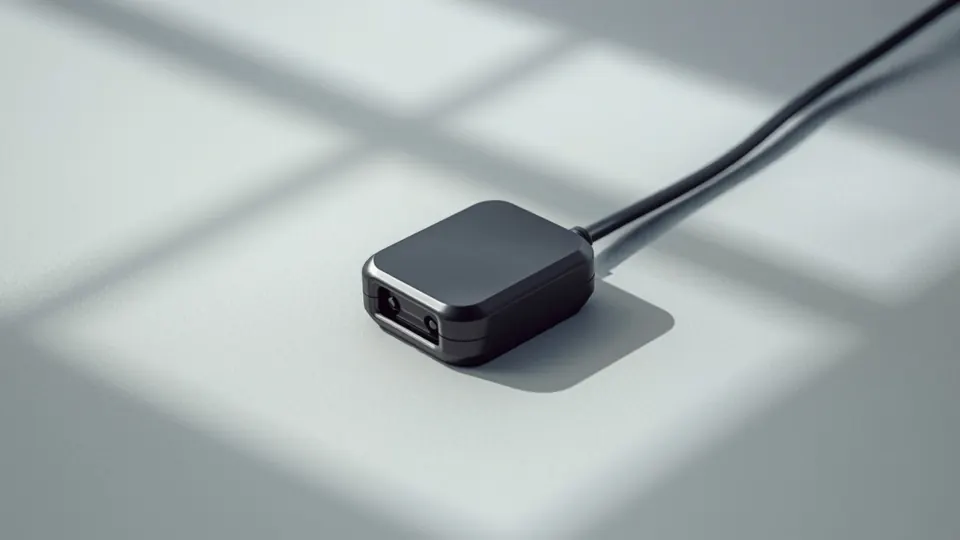
Pick by vehicle
Four kinds of tracker, one platform.
Every model below reports live position, ignition and speed to ZonePin Fleets. Choose by how you want to fit it and what else you need to read.
Compact, hardwired
Small units wired into the vehicle and tucked out of sight, with built-in antennas and a backup battery.
FMB120 · FMB910 · FMB920 · FMC920
Plug-in OBD-II
Plug straight into the diagnostic port of cars and light commercial vehicles — no wiring, fitted in minutes.
FMB003 · FMC003
Hardwired, with data interfaces
Wired trackers with RS232 and RS485 ports for fuel sensors, card readers and other accessories.
FMB125 · FMC125
Two-wheelers & e-mobility
Rugged, waterproof trackers for scooters, motorcycles and electric two-wheelers.
TFT100
The models
Every supported model, spec by spec.
Specs as Teltonika publishes them — follow each link for the full datasheet. Every model here is in production: none is on Teltonika’s end-of-life list (checked October 2026).
- 2G
Teltonika
FMB120
A compact hardwired 2G vehicle tracker with internal GNSS and GSM antennas, an internal backup battery, Bluetooth LE and a full set of inputs/outputs, used to report vehicle position and status to a server over the mobile network.
- Hardwired
- 10–30 V DC
- 170 mAh backup
- IP41
Teltonika datasheetFull specs & best for
- GNSS
- GPS, GLONASS, GALILEO, BEIDOU, SBAS, QZSS, DGPS, AGPS; 33 tracking / 99 acquisition channels
- Network
- GSM; Quad-band 850 / 900 / 1800 / 1900 MHz; GPRS Multi-Slot Class 12 (up to 240 kbps)
- Backup battery
- 170 mAh Li-Ion battery 3.7 V (0.63 Wh)
- Power input
- 10-30 V DC with overvoltage protection; internal fuse 3 A, 125 V
- Protection
- IP41
- Bluetooth
- Bluetooth 4.0 + LE
Best for: Cost-sensitive commercial fleets in India — trucks, buses, vans, taxis and LCVs — where the vehicle can be hardwired and the SIM is on a carrier that still runs 2G (Airtel/Vi). The 3 digital inputs, 2 outputs and CAN-adapter support make it suitable for ignition sensing, door/PTO monitoring, immobiliser relays, fuel-sensor and driver-ID (1-Wire RFID/iButton) work. Not the right pick for two-wheelers (no compact/potted form factor), and worth checking against 2G sunset plans before a large multi-year rollout — the 4G LTE Cat 1 equivalents in the same family are the FMC125/FMC130.
- 2G
Teltonika
FMB910
A small, wire-in 2G GPS tracker with internal high-gain GNSS and cellular antennas, a 170 mAh back-up battery and one digital input, one digital output and one analog input, meant for straightforward location tracking of a vehicle rather than deep wired vehicle-data collection.
- Hardwired
- 1 DIN · 1 DOUT · 1 AIN
- 170 mAh backup
- Bluetooth LE
Teltonika datasheetFull specs & best for
- GNSS
- GPS, GLONASS, GALILEO, BEIDOU, SBAS, QZSS, DGPS, AGPS; receiver: 33 tracking channels
- Network
- Module Teltonika TM2500 (GSM/GPRS/GNSS/Bluetooth LE); Technology: GSM
- Backup battery
- 170 mAh Li-Ion battery, 3.7 V (0.63 Wh)
- Interfaces
- Digital Inputs: 1; Digital Outputs: 1; Analog Inputs: 1; GNSS antenna: Internal High Gain
- Bluetooth
- Specification 4.0 + LE; supported peripherals: EYE beacon and sensor, Headset, OBDII dongle
Best for: Cost-sensitive basic track-and-trace on cars, vans, taxis and light/medium trucks where 2G GSM 900/1800 coverage is adequate and the job is location, trip logs, over-speeding, jamming, towing and crash detection, auto/manual geofencing and a single digital output for remote immobilisation (DOUT control via SMS, GPRS or call). Fuel monitoring is supported through an analog LLS sensor on its one analog input or through a Bluetooth OBDII dongle; ignition can be taken from DIN1, the accelerometer, external power voltage or engine RPM via an OBDII dongle. It is not the right pick where you need a wired CAN or OBD connection, iButton driver ID (no 1-Wire), RS232 sensors, or more than one input/output — those need the FMB1xx/FMB6xx families. Also avoid it for new long-life deployments if the operator is planning around 2G sunset: the compact 4G counterpart is the FMC920, and the FTC920/FTC921 are the newer high-GNSS-precision 4G LTE Cat 1 equivalents. Not a two-wheeler-specific device (the internal battery is a back-up, not the main supply), and not suitable for exposed off-vehicle mounting beyond its IP54 rating. It is not on Teltonika’s end-of-life list; the list names it as the replacement for the discontinued MTB100.
- 2G
Teltonika
FMB920
A small hardwired 2G GPS tracker with a backup battery that reports vehicle position, ignition and basic driving events over GPRS.
- Hardwired
- 1 DIN · 1 DOUT · 1 AIN
- Bluetooth LE
Teltonika datasheetFull specs & best for
- GNSS
- GPS, GLONASS, GALILEO, BEIDOU, SBAS, QZSS, DGPS, AGPS
- Network
- Technology GSM; 2G bands Quad-band 850 / 900 / 1800 / 1900 MHz
- Interfaces
- Digital Inputs 1; Digital Outputs 1; Analog Inputs 1; SIM Micro-SIM
- Bluetooth
- Specification 4.0 + LE; supported peripherals: EYE beacon and sensor, Headset, OBDII dongle
Best for: Cost-sensitive, high-volume Indian fleets doing basic track-and-trace and anti-theft on cars, vans and light trucks, where per-unit price matters more than rich vehicle data. It has only 1 digital input, 1 digital output and 1 analog input on the official interface list (no CAN or OBD port), so it suits ignition sensing and a cut-off relay rather than fuel-sensor or CAN-data work. Its wide 6-30 V DC input also tolerates the low voltages seen during cranking on older vehicles. The main caveat for India is that it is 2G-only, so it depends on GSM networks that operators are progressively retiring.
- 4G LTE + 2G
Teltonika
FMC920
The 4G LTE Cat 1 version of the same compact hardwired tracker, with a backup battery and the same single input/output set, reporting position and basic driving events over LTE with 2G fallback.
- Hardwired
- 1 DIN · 1 DOUT · 1 AIN
- LTE Cat 1
Teltonika datasheetFull specs & best for
- Network
- Technology LTE Cat 1, GSM. 4G LTE bands - FMC920-QJIB0: LTE FDD: B1/B3/B7/B8/B20/B28
- GNSS
- GPS, GLONASS, GALILEO, BEIDOU, SBAS, QZSS, DGPS, AGPS
- Interfaces
- Digital Inputs 1; Digital Outputs 1; Analog Inputs 1; SIM Micro-SIM
Best for: Indian fleets of cars, vans and light-to-medium trucks that want the same simple install and anti-theft use as the FMB920 but on a network that will outlive 2G, and that need TLS-secured or MQTT data transfer. Like the FMB920 it exposes only 1 digital input, 1 digital output and 1 analog input, so it fits ignition sensing plus a cut-off relay, not CAN or fuel-sensor work. Two things to check before ordering for India: the official LTE band lists differ by order code and neither the QJIB0 nor the QKIB0 variant lists band B40 (TDD 2300), which several Indian operators rely on, so confirm band coverage with your SIM provider; and its input range starts at 10 V DC rather than the FMB920's 6 V, which is less forgiving of deep cranking dips on older vehicles.
- 2G
Teltonika
FMB003
A very small plug-and-play tracker that pushes into a vehicle's OBD-II socket and reports position, trip and engine data over the 2G network, including OEM parameters such as Real Odometer and Real Fuel Level.
- OBD-II plug-in
- 10–30 V DC
- 45 mAh backup
- Bluetooth LE
Teltonika datasheetFull specs & best for
- GNSS
- GPS, GLONASS, GALILEO, BEIDOU, SBAS, QZSS, DGPS, AGPS; 33 channel receiver
- Network
- Teltonika TM2500 quad-band module, GSM 850 / 900 / 1800 / 1900 MHz (bands B2/B3/B5/B8)
- Bluetooth
- Bluetooth 4.0 + LE (BLE) — BLE sensors and beacons, hands-free headset
- Backup battery
- 3.7 V 45 mAh internal back-up battery
- Power input
- DC 10–30 V input voltage range, with overvoltage protection
- Interfaces
- OBDII socket, Micro-USB, LED indicators, 128 MB internal Flash memory (422,400 records)
Best for: Cars, taxis, self-drive rentals and light vans that have a working OBD-II port and need a fast, no-wiring install — rental and leasing, insurance telematics and driver-behaviour pilots. It is not suitable for two-wheelers, older trucks, tractors or construction equipment with no OBD-II port, and because it is 2G-only it is the weaker long-term choice in India as operators refarm 2G spectrum; for new commercial fleet rollouts prefer the 4G FMC003. Being a plug-in dongle it can be pulled out by a driver (unplug detection helps, but a hardwired unit is harder to defeat), and it is not a replacement for an AIS-140 approved VLTD where permit vehicles require one.
- 4G LTE + 2G
Teltonika
FMC003
The 4G LTE Cat 1 version of the same OBD-II plug-in tracker: it reads OEM fuel level and odometer plus up to 32 standard onboard vehicle parameters over HS CAN, MS CAN, SW CAN and K-line, and sends them over LTE with 2G fallback.
- OBD-II plug-in
- Reads OEM fuel level & odometer
- 170 mAh backup
Teltonika datasheetFull specs & best for
- Network
- LTE Cat 1 with 2G (GSM/GPRS) fallback; module variants MeiG SLM320-PE2C
- GNSS
- GPS, GLONASS, GALILEO, BEIDOU, SBAS, QZSS, DGPS, AGPS; 33 channel receiver
- Power input
- Nominal +12 V DC; allowed voltage range +10…+30 V
- Backup battery
- 170 mAh Li-Ion battery 3.7 V (0.63 Wh)
- Interfaces
- OBDII socket and Micro-SIM card slot
Best for: The default pick for new Indian deployments on cars, taxis, cab-aggregator fleets, small vans and EVs that have an OBD-II port and need fuel and odometer data without cutting into the wiring loom — rental and leasing, corporate car fleets and usage-based insurance. Band coverage suits India on both documented module variants: LTE-FDD B1/B3/B8 covers the 2100/1800/900 MHz carriers and LTE-TDD B40 covers the 2300 MHz layer. Still confirm the exact variant with your supplier, because the FDD band list differs between SLM320-PE2C and SLM320-L16A. As with any dongle it is removable by the driver, so for trucks, buses, tractors or two-wheelers — or anywhere an AIS-140 approved VLTD is mandated — choose a hardwired model instead.
- 2G
Teltonika
FMB125
A hardwired 2G vehicle tracker with RS232 and RS485 ports, dual SIM and a backup battery, built to read data from third-party serial devices such as digital fuel-level sensors and RFID readers alongside normal GPS tracking.
- Hardwired
- RS-232 · RS-485 · 1-Wire
- 170 mAh backup
- Bluetooth LE
Teltonika datasheetFull specs & best for
- GNSS
- GPS, GLONASS, GALILEO, BEIDOU, SBAS, QZSS, DGPS, AGPS; 33 channel receiver
- Backup battery
- 170 mAh Li-Ion, 3.7 V (0.63 Wh)
- Power input
- +10...+30 V DC with overvoltage protection
- Interfaces
- 1x RS-232, 1x RS-485; 1-Wire temperature sensor and 1-Wire iButton; Bluetooth 4.0 + LE
Best for: Legacy Indian fleets where RS232/RS485 sensor integration is the point - tankers and long-haul trucks running digital fuel-level sensors, RFID driver identification or Garmin navigation units - and only where Airtel/Vi 2G coverage is still available. For new Indian deployments prefer its 4G counterpart, the FMC125, because India's 2G networks are being wound down.
- 4G LTE + 2G
Teltonika
FMC125
The 4G LTE Cat 1 version of the same hardwired tracker, keeping the RS232 and RS485 ports, dual SIM and backup battery while falling back to 2G where LTE is unavailable.
- Hardwired
- RS-232 · RS-485 · 1-Wire
- 170 mAh backup
- Bluetooth LE
Teltonika datasheetFull specs & best for
- GNSS
- 33 tracking channels, 99 acquisition channels, tracking sensitivity -165 dBM, position accuracy < 2.5 m CEP
- Backup battery
- 170 mAh Li-Ion, 3.7 V (0.63 Wh)
- Power input
- +10...+30 V DC
- Interfaces
- 1x RS-232, 1x RS-485, 1-Wire temperature sensor, 1-Wire iButton, Bluetooth 4.0 + LE
Best for: Indian trucks, tankers and commercial vans that need serial-sensor telematics - digital fuel-level sensors for pilferage control, RFID or iButton driver ID - on a network that will outlive 2G. Band coverage suits Indian operators well (B1, B3 and B8 plus TDD B40/B41 on the MBIB0 variant; B5 is only on the MCIB0 variant), and dual SIM helps on highway routes with patchy single-operator coverage. It is current: Teltonika's end-of-life table names the FMC125 as the replacement for the discontinued FMU125.
- 2G
Teltonika
TFT100
An IP67 hardwired tracker for e-mobility and high-voltage machinery that runs directly off a 10–97 V supply, reads vehicle data over one bus interface (CAN, UART, RS232 or RS485, chosen per order code), and carries an 1800 mAh internal back-up battery.
- Hardwired
- 10–97 V DC
- One bus: CAN, UART, RS232 or RS485
- 1800 mAh backup
Teltonika datasheetFull specs & best for
- Network
- 2G(GSM/GPRS)/GNSS/BLUETOOTH® LE
- GNSS
- GPS, GLONASS, GALILEO, BEIDOU, SBAS*, QZSS*, DGPS*, AGPS*; 33 tracking / 99 acquisition channels
- Power input
- Input voltage range 10 - 97 V DC with overvoltage protection; internal fuse 3.15 A, 125 V
- Backup battery
- 1800 mAh Li-Ion battery, 3.7 V (6.66 Wh)
- Interfaces
- One modification per device: CAN (CAN-H, CAN-L), UART (RX/TX), RS232 (IN/OUT) or RS485 (A/B)
Best for: Electric fleets rather than conventional diesel ones: e-scooters, e-mopeds, e-motorbikes, e-trucks and e-forklifts, plus telehandlers, loaders and similar equipment, where the 10–97 V supply range and CAN data reading (Manual CAN, Manual J1939, Bosch, Askoll, Default J1939, FLEX modes) are the point. Note that each unit ships with only ONE bus interface — the order code decides whether it is CAN, UART, RS232 or RS485 — so the interface must be specified at purchase. Ordinary 12/24 V cars, vans and trucks are better served by Teltonika's standard FMB/FMC vehicle trackers. It is current — Teltonika's end-of-life table names it as the replacement for the discontinued TST100 — but it is 2G-only, so check 2G sunset plans before standardising on it in India.
Choosing
2G or 4G, wired or plug-in?
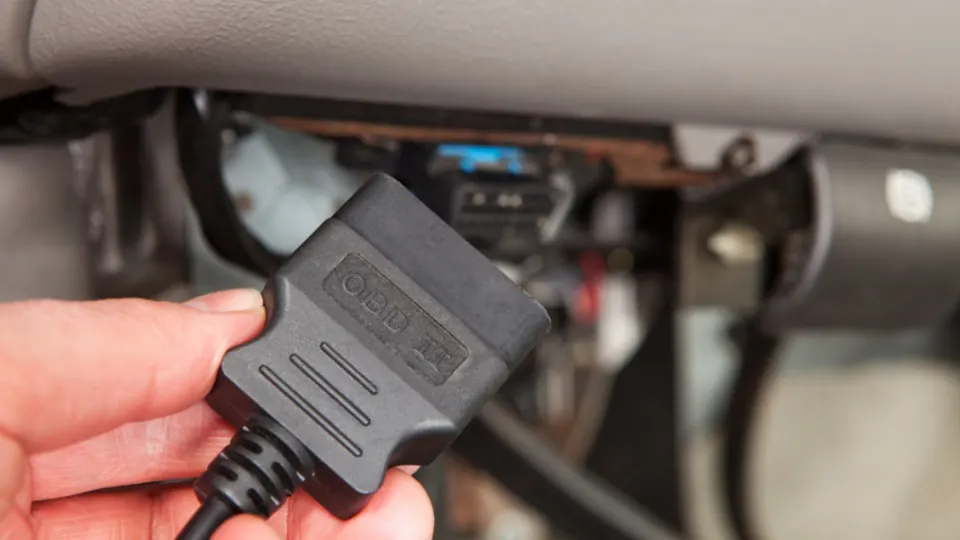
Plug-in OBD-II trackers suit cars and light vans you want live today. Hardwired units are harder to tamper with and suit trucks and buses. The 4G LTE Cat 1 models fall back to 2G, so they are the safer long-term pick.
FAQ
Hardware questions.
No. If your vehicles already carry one of the trackers listed here, register them in ZonePin Fleets by IMEI — one at a time or in bulk from a spreadsheet. Extra or replacement devices can be requested from inside the app.
Both families work with ZonePin Fleets. The 4G LTE Cat 1 models (FMC) also fall back to 2G, which makes them the safer long-term choice; the 2G models (FMB) suit areas where 2G coverage is good. Our guide to choosing a tracker goes into the detail.
You can register it in the app as “Other / not listed”, but talk to us first: we will tell you whether its data will come through before you fit it across the fleet.
Hardware
Not sure which tracker? Ask us.
Tell us what you run — trucks, vans, buses, equipment or two-wheelers — and we will suggest the right tracker for each.